
Blog · Email
EmailStop sending the same email cadence to every subscriber
Frequency is a segment-level decision, not a list-level one. Here is how we set it — and the four engagement tiers that determine who hears from you five times a week and who hears from you once a month.
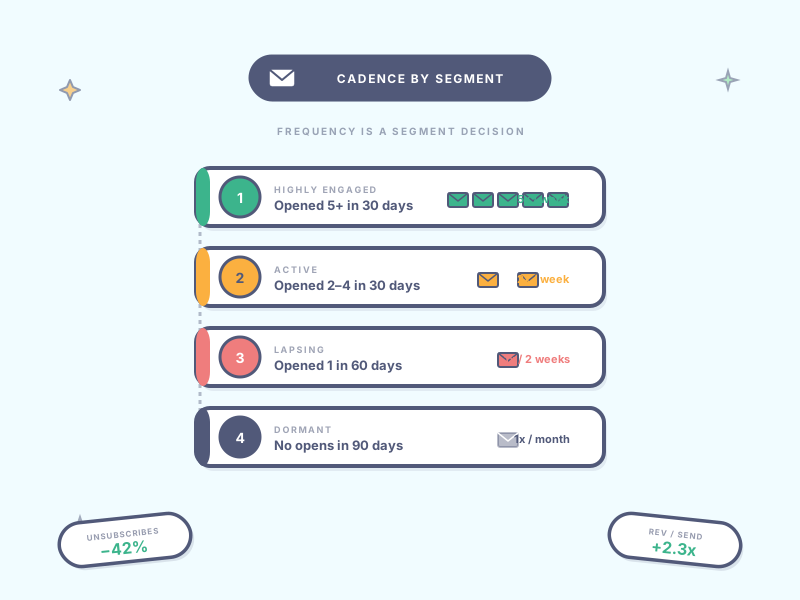
The most common email marketing mistake we see is treating frequency as a list-level decision. Brands settle on “we send two emails a week” or “we send daily” as if the whole list deserves the same treatment, and then wonder why their unsubscribe rate climbs.
Frequency isn’t a list-level decision. It’s a segment-level one. Your highly engaged subscribers want more from you than you’re currently sending them. Your dormant subscribers want significantly less. Sending the same cadence to both produces the worst version of both outcomes: undermonetized engagement on one end, deliverability damage on the other.
Here’s the segmentation framework we use across the lifecycle accounts we run.
The four engagement tiers
Build these four tiers in Klaviyo, Customer.io, or whatever ESP you’re using. The exact thresholds will shift based on your category and send volume, but the structure holds across categories.
Tier 1: Highly Engaged — 5 sends per week
Definition: opened 5+ emails in the last 30 days, or clicked any email in the last 14 days. These are your most valuable list members. They want to hear from you. Sending them two emails a week is undermarketing.
What we send them: regular promotional content, new product announcements, behind-the-scenes content, exclusive offers, and the standard lifecycle flows everyone gets. The combined volume lands around 5 sends per week comfortably.
What happens when you actually do this: highly engaged segments generate more revenue per subscriber per month than the rest of the list combined. They’ve raised their hand. Stop sending them the bland-version-suitable-for-everyone email.
Tier 2: Active — 2 sends per week
Definition: opened 2–4 emails in the last 30 days. These are your normal subscribers — interested but not glued to your inbox. Two sends per week is the cadence ceiling for this group.
What we send them: the highest-priority promotional content, key product announcements, and standard lifecycle flows. We skip the third or fourth weekly send that Tier 1 gets.
Tier 3: Lapsing — 1 send per 2 weeks
Definition: opened 1 email in the last 60 days, or has not opened for 30–60 days. These subscribers are drifting. Hammering them with more emails accelerates their drift; sending them less buys time for re-engagement.
What we send them: only the absolute highest-priority sends — the top promotion of the month, a single re-engagement campaign per quarter, the standard win-back flow if they enter it. Most of your weekly campaign volume should skip this tier entirely.
Tier 4: Dormant — 1 send per month, or full suppression
Definition: no opens in 90+ days. These subscribers are damaging your deliverability. Every send to them lowers your sender reputation, which makes inbox placement worse for your engaged segments.
The decision rule: send them once per month with a single high-value re-engagement attempt (typically a clear unsubscribe choice or a specific offer designed to re-engage). If they don’t open within 60 days of that send, suppress them from all campaigns. They can re-engage via website visits or via the deliverability team’s quarterly sunset flow, but they aren’t getting your weekly promotional content anymore.
The instinct most marketers have at this stage is “but they’re still on my list, I paid to acquire them, I should still mail them.” That instinct is the single biggest deliverability problem in mid-market email programs. The unopened-by-dormant emails are the data Gmail and Outlook use to decide your sender quality. Less is more.
How to actually implement this
Three steps, in order:
- Build the four segments in your ESP. The conditions above are starting points; tune them to your category. SaaS with monthly billing cycles can typically tolerate longer engagement windows than DTC with weekly purchase frequency. The structure (four tiers, declining cadence by tier) holds regardless.
- Set up cadence rules at the segment level, not the campaign level. Every campaign you send should be filtered by which tiers are eligible. Klaviyo and similar platforms support this via segment filters on campaign sends. The work is a one-time configuration; once it’s done, every future campaign respects the cadence rules automatically.
- Build the tier-transition flows. When a subscriber moves from Active to Lapsing, they should enter a re-engagement flow. When they move from Lapsing to Dormant, they should hit a final attempt and then get suppressed. These tier transitions are where most revenue recovery happens, and they’re invisible without automation.
What changes when you do this
Three metrics move predictably:
Unsubscribe rate drops 30–50%. The biggest source of unsubscribes is over-sending to lapsing subscribers. Cut that volume, watch the unsubscribe rate fall.
Revenue per send rises 1.5–3x. You’re sending fewer total emails but to better-targeted audiences, so the conversion rate per send climbs. The total revenue number usually goes up too because the highly engaged tier is being mailed more often than before, and they convert at much higher rates.
Inbox placement improves. This is the invisible compounding effect. Cutting sends to unengaged subscribers improves your sender reputation. Better sender reputation means more of your engaged-tier sends land in the Primary tab instead of Promotions. Over six months, this is often worth more revenue than any single campaign optimization you’ll run.
The accounts where this actually moves numbers
The DTC skincare account we wrote about in this case study moved email’s share of total revenue from 14% to 38% in nine months, and the cadence-by-segment framework was the foundation underneath everything else we did. Cutting the list by 22% on day one (suppressing dormant subscribers) felt counterintuitive to the founders. Three months later, deliverability had recovered to the Primary tab and the remaining list was generating more revenue than the full list had been.
The principle to internalize: your list isn’t one audience, it’s four. Mail them like four.
Want a second opinion on your email cadence?
Our email team audits ESP setups and shows you which subscribers are getting too much, which aren’t getting enough, and where revenue is hiding.
Get your free audit →
Written by
Sam Reyes
Email Lead
Sam runs email and lifecycle programs at AgencyName. Klaviyo certified, HubSpot certified, opinionated about subject lines.
Get the weekly playbook
One actionable marketing tactic, every Tuesday. Read by 50,000+ marketers.
Unsubscribe in one click. No spam, ever.
Ready for a marketing plan that hits?
Free. No obligation. 48-hour turnaround.