
Blog · Paid Social
Paid SocialHow to spot creative fatigue on Meta before your ROAS does
The leading indicators of creative fatigue show up two to three weeks before the revenue chart does. By the time ROAS drops, you’ve already burned spend on creative that stopped working.
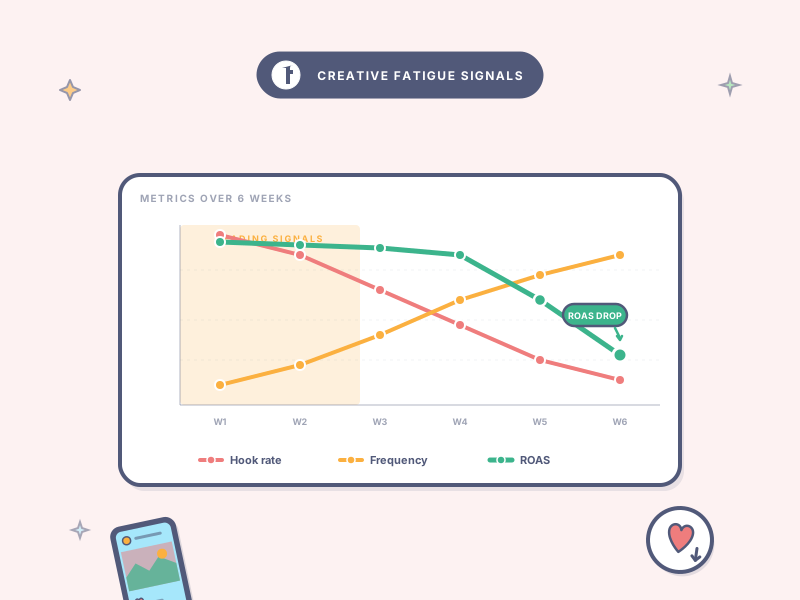
ROAS is a lagging indicator. By the time it drops, you’ve already burned two to three weeks of spend on creative that stopped working.
The fix isn’t to stare at ROAS harder. It’s to watch the signals that move first. Meta gives you four of them, and they’re available in your Ads Manager today — most accounts just aren’t watching them in the order that matters.
Why ROAS lags
Creative fatigue doesn’t start at the campaign level. It starts at the user level. Someone in your target audience sees your ad for the third time, swipes past it, and the cycle begins. Their dwell time drops. Meta notices fewer engaged impressions and serves the ad more aggressively to a narrower pool — frequency rises. Social proof signals (likes, comments, shares) fall. Meta’s auction starts charging more for the same inventory. Only then does ROAS catch up to what was already true a week or two earlier.
Every step in that chain leaves a visible trace before ROAS does. The earlier the signal, the cheaper the fix.
The four leading indicators, in order of how early they fire
1. 3-second hook rate — fires within days
The 3-second hook rate is the percentage of impressions where the viewer watched at least the first three seconds of your ad. It’s the earliest signal you can read because it captures the moment a user decides whether your creative is worth their attention.
When hook rate starts dropping, it’s almost always before any other metric has moved. Fresh creative typically lands between 30% and 45% hook rate for short-form social. Mature creative settles around 25–35%. When you see a 20% week-over-week drop in hook rate for a specific ad, that ad has started fatiguing — typically a week or more before frequency or engagement will tell you the same story.
This is also the cheapest signal to act on. You can swap the first three seconds of a video ad without re-shooting anything. New hook, same body, same CTA. We’ve extended the useful life of fatiguing creatives by 30–40% by doing exactly this — refreshing the hook, leaving everything downstream intact.
2. Frequency — fires 1–2 weeks early
Frequency is the average number of times a unique user has seen the ad. It rises when Meta has saturated its initial high-intent audience and starts serving the ad more often to the same users.
The threshold worth watching: if an active ad set’s frequency exceeds 3.5 within a rolling 7-day window, you’re inside the saturation zone. Some accounts run comfortably at 4–5 (high-LTV products, deeply targeted audiences). Most should treat 3.5 as the warning line.
The reason frequency is a leading indicator is structural: rising frequency means Meta is running out of fresh impressions to serve. That’s the moment the auction starts re-pricing your inventory, and re-pricing always shows up in the cost data before it shows up in the revenue data.
3. Engagement rate — fires 1–2 weeks early
The combined rate of likes, comments, shares, and saves per impression. This one matters because Meta’s algorithm uses social proof signals to find more users like the ones who already engaged. When engagement drops, the algorithm loses its bearings — and the audience expansion stops.
Watch for a 30%+ drop versus the ad’s first-week baseline. If a creative pulled 2% engagement rate in its first seven days and is now pulling 1.3% in week three, that’s a red flag. Even if hook rate and frequency look stable, engagement decline means the algorithm is no longer being fed signal it can use to expand the audience pool.
4. CPM creep — fires 2–3 weeks early
The lagging-est of the four leading indicators, and the loudest. By the time CPM is rising 15–25% week over week for the same ad set, the other three signals have been flashing red for at least a week. CPM creep is the canary in the coal mine — and it’s still earlier than ROAS.
The reason it lags hook rate and frequency: CPM is the auction’s response to your declining signal strength. Meta charges more to serve increasingly-saturated audiences because it has to dig deeper to find users who might engage. You see CPM rise after the underlying engagement quality has already dropped.
How to monitor this weekly
Build a creative-level report in Ads Manager that shows, per ad: 3-second hook rate, frequency (rolling 7-day), engagement rate, CPM, CTR, spend, and ROAS. Sort by spend descending. Review every Monday morning, before any scaling decisions for the week.
Color-code the report. We use three thresholds:
- Green: hook rate within 10% of first-week baseline, frequency < 2.5, engagement within 15% of baseline, CPM stable.
- Amber: any single metric has moved past its warning threshold. Action: prepare a creative refresh; don’t increase budget.
- Red: two or more metrics are past their warning thresholds. Action: refresh now; freeze scaling on this ad.
Once you’re reading the four signals weekly, ROAS becomes confirmation rather than discovery. You’ll know which ads are about to drop before the revenue chart tells you.
Refresh versus kill
Not every fatiguing ad needs to die. Most need a refresh — typically of the hook, sometimes of the body, rarely of the entire concept. The decision rule we use:
- Refresh when the creative concept is still resonating but the specific execution has gone stale. Hook rate dropping with engagement rate holding is the classic signal — the audience is bored of seeing this exact ad, not bored of the idea. Swap the hook, keep the rest.
- Kill when the concept itself has stopped converting. All four leading indicators in the red and ROAS dropping means the audience has moved past this angle entirely. Don’t try to revive it with a hook refresh; cut it and ship the next concept.
Most accounts spend too much energy reviving dead creative and not enough energy refreshing creative that’s still close to working. The four-signal framework helps you tell the difference earlier. See how we scaled Meta and TikTok to 5.2x ROAS at 4x spend using exactly this refresh cadence — and the structured weekly creative production volume that made it possible.
The 80/20 of fatigue prevention
If you do one thing weekly, do this: review hook rate for every active ad spending more than $500 per week. That single habit catches roughly 60–70% of fatigue-related waste before it shows up in ROAS, and it’s the cheapest signal to act on because hook refreshes don’t require new productions.
Frequency, engagement rate, and CPM creep are valuable confirmations. Hook rate is the early warning. If you’re going to short-cut the system, short-cut to hook rate.
Watch the four signals, refresh on amber, kill on red. ROAS becomes the result of doing creative work weekly, not the metric you find out about three weeks too late.
Want a second opinion on your Meta creative cadence?
Our paid social team audits Meta accounts and shows you which of your active ads are in the fatigue warning zone before ROAS confirms it.
Get your free audit →
Written by
Priya Shah
Paid Social Lead
Priya runs paid social across Meta, TikTok, and LinkedIn. Previously in-house at two DTC brands you have probably bought something from.
Get the weekly playbook
One actionable marketing tactic, every Tuesday. Read by 50,000+ marketers.
Unsubscribe in one click. No spam, ever.
Ready for a marketing plan that hits?
Free. No obligation. 48-hour turnaround.